
Wood Element
Welcome to our exploration of the Five Elements through the lens of acupuncture and Chinese medicine. In this newsletter, we’ll explore the Wood element, its connection with anger, ways to clear stuck energy, an important acupressure point, a qi gong exercise, a food to enjoy and a reflection on benevolence.
Wood Overview
Spring has arrived! Flowers are blooming, trees are greening, birds are singing, and temperatures are warming. In Chinese medicine, spring is associated with the Wood element, which includes the organs and meridians of the Liver and Gallbladder. Imagine a seed that’s been lying dormant underground, hibernating during the cold winter months. As the ground warms, suddenly all of its potential energy manifests into action as it bursts through the soil and begins rapidly growing towards the sun. This is the power of the Wood element. Themes of the wood element include birth, growth, vision, clarity, flexibility, assertiveness, anger, decision making and planning, and benevolence.
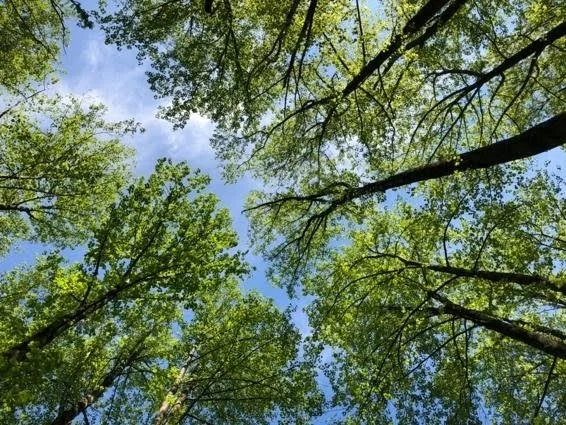
A tree perfectly embodies the energies of Wood. Its deep roots give it firmness, steadiness and keep it grounded, while its inherent flexibility allows it to bend with strong winds and weather storms without breaking. While trees have a genetic blueprint of how they “want” to grow in ideal conditions, they’re also incredibly adaptable – they may find themselves growing precariously on a hillside, needing to conserve water in times of drought, lacking sunlight, or confronting and growing around large obstacles.
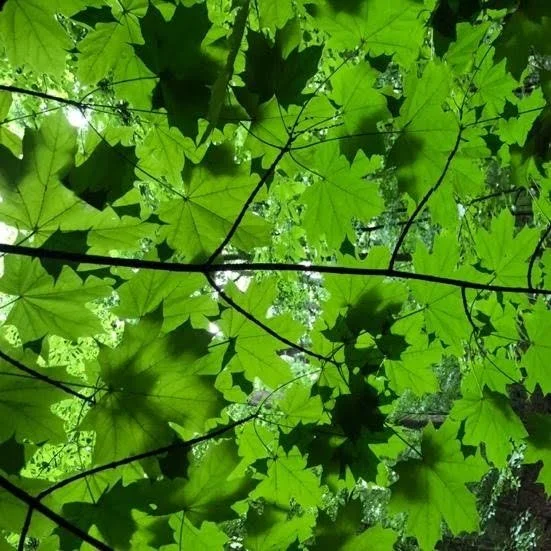
“When you go out into the woods, and you look at trees, you see all these different trees. And some of them are bent, and some of them are straight, and some of them are evergreens, and some of them are whatever. And you look at the tree and you allow it. You see why it is the way it is. You sort of understand that it didn’t get enough light, and so it turned that way. And you don’t get all emotional about it. You just allow it. You appreciate the tree.
The minute you get near humans, you lose all that. And you are constantly saying ‘You are too this, or I’m too this.’ That judgment mind comes in. And so I practice turning people into trees. Which means appreciating them just the way they are.”
― Ram Dass
If we have wintered well by getting appropriate rest during the Water phase, just like that seed bursting through the dirt, we’ll have plenty of energy to put towards fulfilling our goals. This is a perfect time to dream big, envision the future we want to create and start something new – and then begin taking small, actionable steps to achieve it. If our Wood element is imbalanced however, we may find ourselves tired, irritable or depressed as our internal landscape is out of sync with the external blooming of spring.
Anger
Anger is the emotion associated with spring and Wood. Anger is a natural and appropriate emotion to feel – whether to injustices we face, violations of our boundaries, when we can’t put our ideas into action, or we’re confronted with unwanted changes and situations beyond our control. When it becomes unhealthy is when we can’t transform it into appropriate action and we see everything and everyone as getting in our way – thwarting our growth or sense of self and only “seeing red”. Beneath the emotion of anger is often another emotion like grief or fear, which also requires our compassionate presence to be transformed.
Instead of either being consumed by or repressing anger, can we allow it to be expressed safely and use it to fuel our growth? If our preferred path to action is blocked, can we use our creativity and imagination to find another way? Or will we stubbornly cling to our desired path and remain in anger? If we allow it, anger can be a potent catalyst for transformation and evolution.
“When we get angry, we suffer. If you really understand that, you also will be able to understand that when the other person is angry, it means that she is suffering. When someone insults you or behaves violently towards you, you have to be intelligent enough to see that the person suffers from his own violence and anger. But we tend to forget. We think that we are the only one that suffers, and the other person is our oppressor. This is enough to make anger arise, and to strengthen our desire to punish. We want to punish the other person because we suffer. Then, we have anger in us; we have violence in us, just as they do. When we see that our suffering and anger are no different from their suffering and anger, we will behave more compassionately. So understanding the other is understanding yourself, and understanding yourself is understanding the other person. Everything must begin with you.”
―Thich Nhat Hanh - Zen Buddhist Monk
Acupressure point
What are they and how are they used? While needles have a more pronounced effect, these are acupuncture points that can be activated with finger pressure. Either press and hold the point with medium pressure, or, while engaging with pressure you can make small clockwise circles – either way, hold it for anywhere from 1-3 minutes on both the left and right sides of the body. This can be done as needed or a handful of times a day.
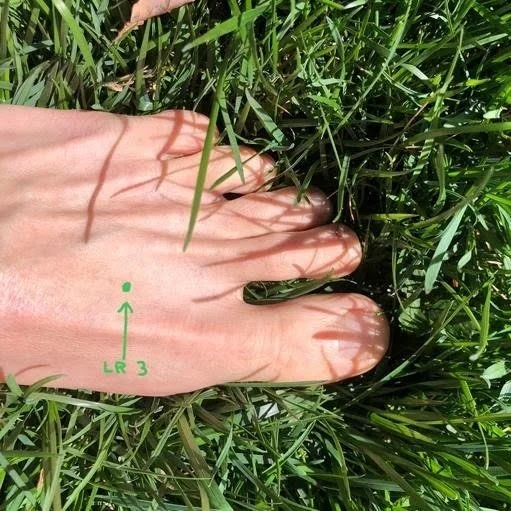
Liver 3 (Great Rushing, Taichong, “Happy Calm”)
Location: On the top of the foot between the first and second toes, in a depression about 1.5 inches towards our bodies from the outer toe webbing.
Uses: A quintessential point for allowing qi to flow smoothly, bringing calm to body, mind and spirit and easing frustration, anxiety and depression. It also brings Earth qualities of stabilizing, grounding and rooting. It nourishes the blood, which is important for standing strong, taking up appropriate space, and speaking with courage and conviction when necessary. Physically, this point can ease headaches, dizziness, regulate menstruation and support eye health.
Moving Stuck Energy
When we’re feeling irritated, angry or frustrated for a prolonged period, our energy isn’t flowing smoothly. Rather than trying to repress it, which can strengthen it, try something that will allow it to move through you. The Wood element is associated with sinews and tendons, so any exercise that engages them will be helpful:
Running or taking a brisk walk outside running 🏃
This clears stagnant energy from our bodies and restore smooth flow of qi
Lifting weights (or anything heavy) 🏋️♀️
This can increase proprioception, which is how your body senses its position in the environment. This invites a sense of boundary and grounding in our bodies, and can allow emotions to move and calm our minds.
Scream! 😱
If you’re in your car or another area where it’s safe to scream, do so! You could scream into a pillow, or use your breath and diaphragm to silently scream without using your vocal cords if you’re around others. Pay attention to any sensations in your body before and after screaming.
Dance and sing 💃
Put on a favorite raucous tune and dance it out. Be uninhibited in your expression!
Qi Gong 🙆♂️
Gently and powerfully engages your sinews and tendons to bring ease to your body, mind and spirit.
Qi Gong
Qi gong is an excellent way to embrace the Wood element – engaging our sinews and tendons and moving stuck energy. It was developed thousands of years ago as a branch of Chinese Medicine and it involves a series of slow, coordinated movements and mindful breathing. An ancient saying goes, “where there is free flow, there is no pain, where there is no free flow, there is pain.” By facilitating the free flow of qi, qi gong can help maintain health of body, mind and spirit. Mimi Kuo-Deemer is one of my favorite practitioners for Qi gong – her approach is clear, descriptive and informative. Here’s a link to her Wood Element Qi Gong video. You’re welcome to try the whole sequence, or simply pick one or two moves that resonate with you and practice those.
Food Therapy
Sour is the flavor associated with the Wood element. Sour flavors enter and stimulate the Wood element organs of the Liver and Gallbladder, helping their energy to flow properly. Moderation is key, as excessive consumption of sour foods can have an opposing effect.
Lemon is known for its ability to properly circulate qi and blood, eliminate toxins, clear phlegm and relieve dryness by generating fluids. It can help soothe a sore throat or cough and support healthy digestion. It’s also known for its antioxidant and immunity enhancing properties.
Starting your day with a glass of room temperature or warm water with up to half a lemon squeezed into it can help with digestion and proper qi flow. If you’re experiencing a cough, especially one with clear phlegm, you can drink a mixture of the juice from one lemon with a tablespoon of honey and warm water to help alleviate it.
Benevolence
Each element has a virtue, and Wood’s virtue is benevolence – performing kind or generous acts for others. At its core, it also recognizes our interconnectedness; by giving freely to others, we invite the same for ourselves. Small acts can compound quickly when we consider the ripple effects they have in the world, inspiring people to give in the ways they’ve received. A simple act of holding the door open for someone, being especially friendly to a cashier or complimenting a stranger can uplift them and change their day for the better. When they get home, maybe they will be a little more patient with their child, who in turn will be kinder to a friend – the potential positive effects are exponential.
Again we can turn to trees as our teachers. As Peter Wohlleben notes in his book The Hidden Life of Trees, trees share water and nutrients through their root systems and also communicate through complex fungal networks, playfully deemed the “woodwide web.” They share nutrients not only with their own species but other species as well – a tree is only as strong as the forest that surrounds it. Strong trees support weaker or poorly located trees, and when strong trees get sick or attacked by insects, they are supported by the weaker trees. In one instance, the stump from a tree felled about 400 years prior was still alive! It was being sent nutrients from neighboring trees that were still able to photosynthesize.
As we witness life springing into action all around us—flowers blooming and vibrant green leaves unfurling—I invite you to reflect on the trees. Let us nurture new growth, give and receive freely, and embrace the power of community to co-create a kinder world—one that we all aspire to live in.
If you find yourself stuck in anger or frustration, out of step with the growth of spring, or wanting physical or mental clarity, please reach out. For more information about my practice, please visit here.
Warmly,
Corey